Mwaura: Government on Track to Hire 116,000 Teachers as Fuel Supply Stabilises
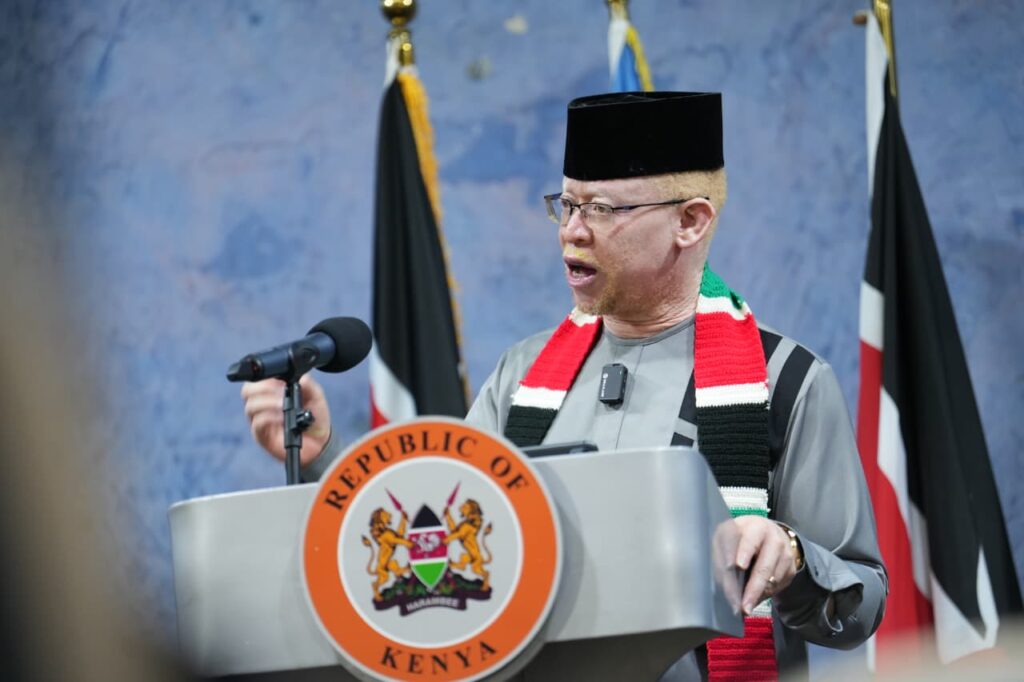
Government Spokesperson Isaac Mwaura .
The government says it remains on course to employ 116,000 teachers as part of efforts to address the long-standing staffing shortage in public schools.
Speaking during a press briefing at Harambee Annex in Nairobi on Monday, Government Spokesperson Isaac Mwaura said more than 100,000 teachers have already been recruited. He explained that the question surrounding the remaining 44,000 teachers is currently before the courts and is being handled through the appropriate legal and administrative processes.
“We remain committed to ensuring that the target of 116,000 teachers is achieved. So far over 100,000 teachers have been engaged, while the matter relating to the remaining positions is before the courts,” he said.
Mwaura also moved to calm concerns about fuel availability in the country following recent disruptions reported in some areas. He said the situation had largely been caused by hoarding and assured Kenyans that there is adequate fuel in the market.
“It is important to clarify that there is enough fuel supply in the country. Initial disruptions were due to hoarding and we call upon all parties to release fuel to the public,” stated Mwaura.
He added that the Energy and Petroleum Regulatory Authority (EPRA) is expected to issue fresh guidelines to address the situation while investigations into recent arrests in the sector continue.
On agriculture, the spokesperson said the government has begun settling debts in the coffee and sugar sectors. According to him, Sh2 billion has been allocated in the current budget to start clearing the Sh6.8 billion owed in the coffee sector. A further Sh2 billion has also been set aside to support the sugar industry, which is grappling with debts amounting to about Sh10 billion.
The payments are meant to ensure that workers and farmers linked to the industries receive long outstanding dues.
Mwaura acknowledged public concern about reports of malpractice in the petroleum sector but assured Kenyans that fuel quality and fair pricing will be maintained despite tensions in the global energy market.
He said the government is also pursuing plans to expand the country’s energy capacity as part of a broader strategy to strengthen energy security.
“The plan seeks to raise installed electricity capacity from the current 3,271 megawatts to at least 10,000 megawatts within the next five years. Among the projects under consideration are nuclear power plants planned for Siaya and Kilifi counties,” Mwaura explained.
Construction of the Siaya project is expected to begin in March 2027 and could create between 5,000 and 12,000 jobs during the building phase, with additional technical positions once the plant becomes operational.
Mwaura said the government is encouraged by recent economic indicators, noting that inflation eased to 5.3 per cent between late March and early April, partly due to lower food and energy costs. During the same period, the Kenyan shilling stabilised at about Sh130 against the US dollar.
Economic growth for the 2025/26 financial year is projected at 5.5 per cent, supported by recovery in agriculture and strong performance in the service sector.
Tourism also continued to rebound, with the country receiving 7.9 million visitors last year. Domestic tourism grew by 5.2 per cent while international arrivals increased by 2.7 per cent, a trend the government attributes to reforms such as the Electronic Travel Authorisation system and improved tourism offerings.
Revenue collection has also improved, with the government reporting more than Sh2 trillion collected so far, representing a 12 per cent increase compared with the previous year.
Mwaura said the country has managed to settle a significant portion of its maturing external debt, helping to reduce default risks and improve its credit rating. The fiscal deficit has also been reduced to 3.9 per cent of GDP following efforts to streamline public spending.
Agriculture remains a key pillar of the economy, contributing more than 22 per cent of the country’s gross domestic product. The government has continued to support the sector through fertiliser subsidies aimed at increasing production and lowering food costs.
The spokesperson also highlighted progress in women’s empowerment under the government’s economic programme. He said 19.3 million women are currently registered with the National Social Health Authority(SHA) while women now account for 44 per cent of the judiciary, 32 per cent of cabinet positions and 36 per cent of corporate boards.
Nearly half of the units under the affordable housing programme have been allocated to women, while funds such as the Women Enterprise Fund and the National Government Affirmative Action Fund continue to support women-led businesses.
On education and culture, Mwaura said the government has revised guidelines governing the Kenya National Drama Festival following debates surrounding the 2026 edition.
Under the new rules, performances must largely be developed and presented by learners under the supervision of registered teachers. The use of dangerous props including live fire, weapons and glass bottles has been banned. Content promoting violence, hate speech, drug abuse or obscenity will also not be allowed.
Artificial intelligence may be used in limited ways but must not replace the creative work of learners.
Mwaura also called on young people to take part in the ongoing voter registration exercise. He said more than 344,000 new voters have already been registered by the electoral commission.
“It is important for young people to obtain identification documents and register as voters so they can participate in shaping the country’s future,” he urged.
On preparations for the 2027 Africa Cup of Nations, which Kenya will co-host with Tanzania and Uganda, Mwaura said the country has so far paid Sh3.9 billion toward the tournament. The three host nations have collectively contributed Sh11.7 billion as part of the preparations.
Renovation work at Kasarani Stadium and other venues is underway and is expected to continue over the next year as the region prepares to host the continental competition.